

Indoor air quality and the ventilation of enclosed spaces has taken center-stage in recent times because of the concerns of air-borne infection spread. Tiny droplets and aerosols in the air exhaled by an infected person can carry the pathogen to large distances, floating in the air for a long duration of time. This poses a threat of infection to a large number of healthy people sharing common spaces, like classrooms, offices, gyms, theaters, public transport, and so on.
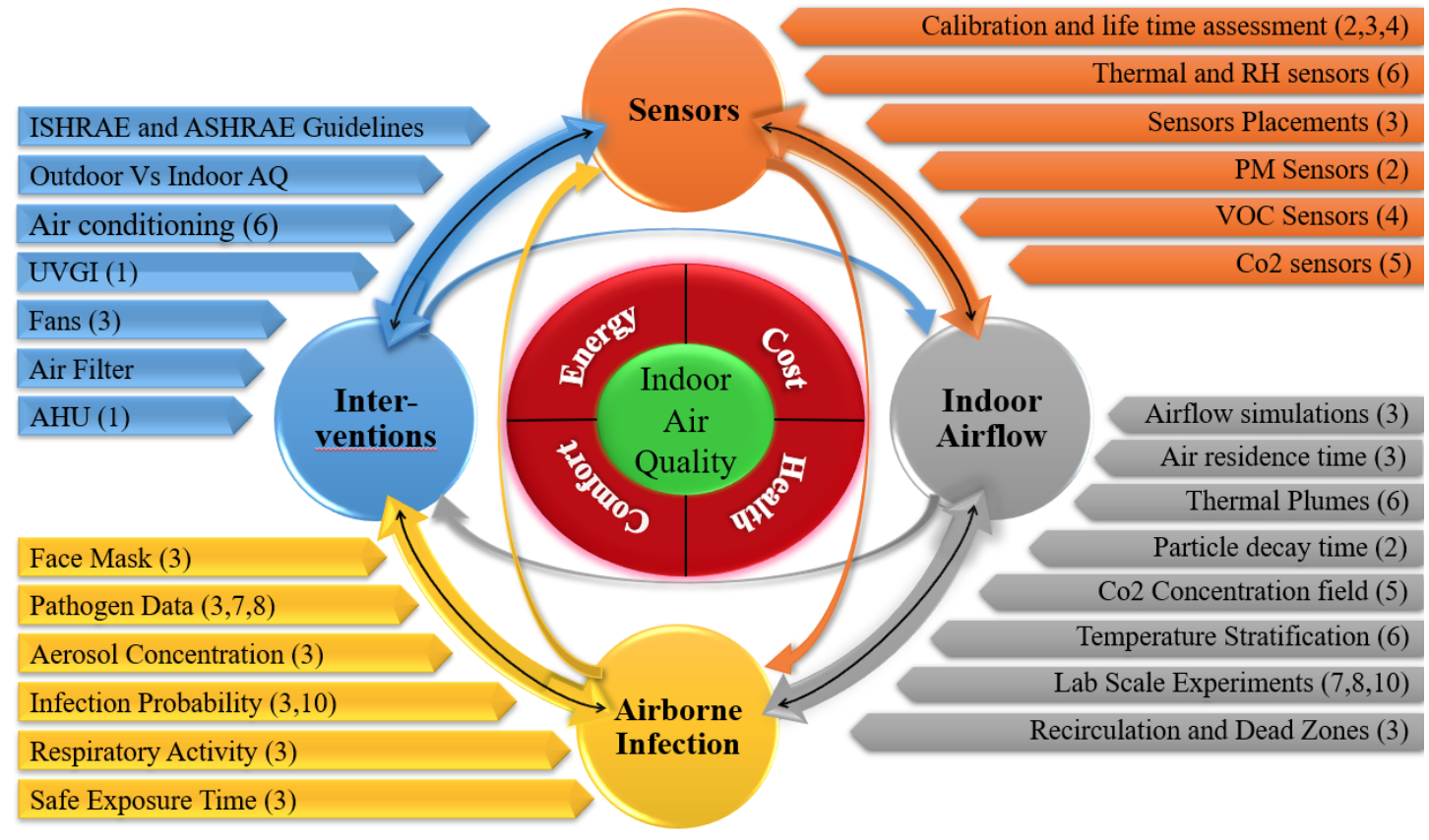 Above image-Numbers refers to SubProjects
Most of the earlier guidelines of indoor ventilation fall short in dealing with air-borne infection, necessitating new research and newer ways to study indoor air quality. At IIT Bombay, a group of faculties with diverse backgrounds, from air flow and infectious diseases to sensors, controls and IoT. They came up with safety guidelines based on current know-how, industry practices and recent research in air-borne infection. Several intervention methods (portable filtration units, exhaust fans and ducts, UV disinfection, etc.) have been tested in-house.
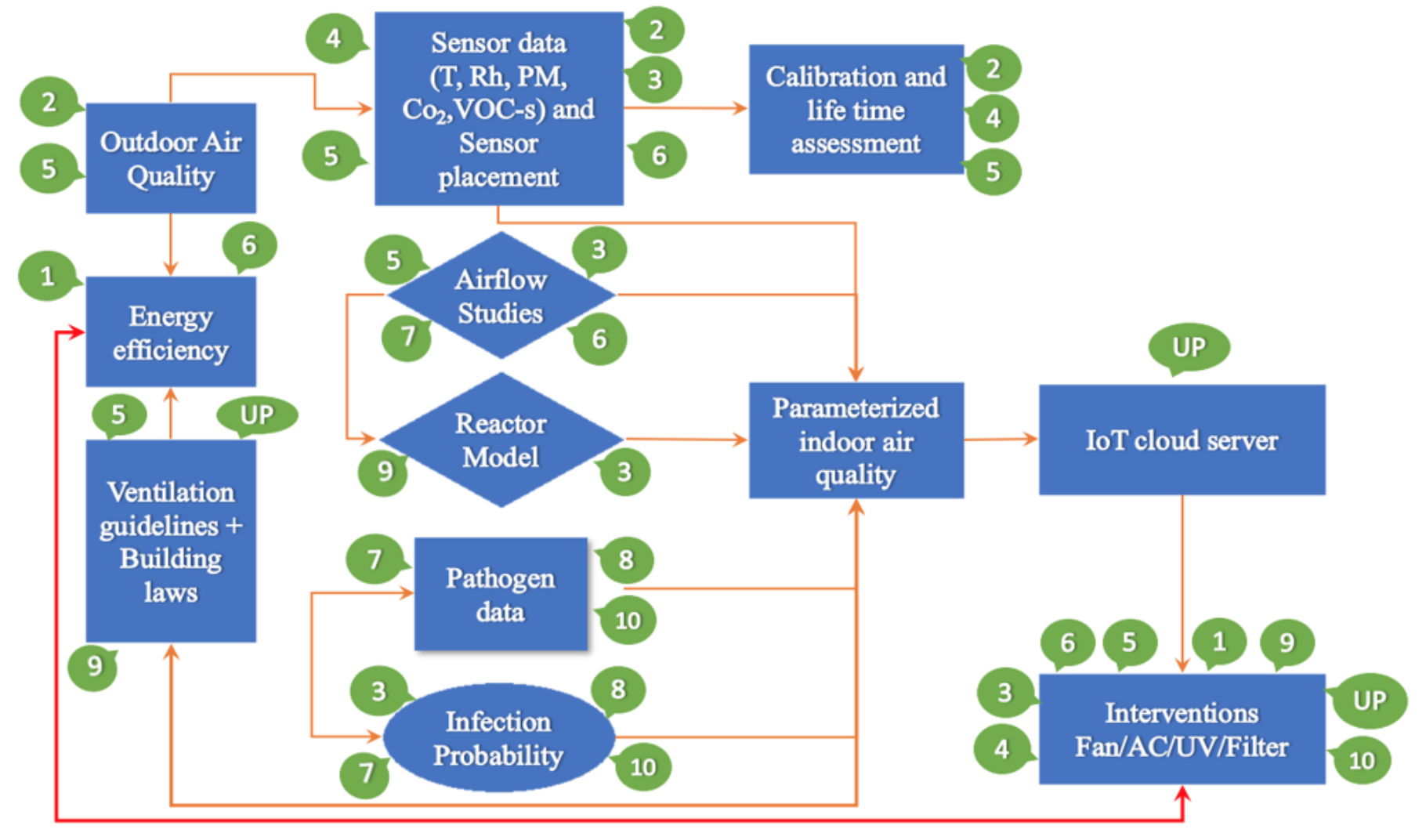
The ventilation group at IIT Bombay aims to tackle indoor air quality for the broader community from the perspective of public health. The team is using a multi-pronged approach involving air quality sensors, control of intervention, IoT, infection modeling and air flow simulation. The objective is to assess the air quality in indoor spaces in the campus, and design and implement intervention to mitigate air-borne infections and air quality related issues. Several sub-projects are identified which will address different aspects of indoor ventilation. The overall goal is to achieve IoT-based integration of sensors and interventions to monitor, control and optimize air-quality, occupant comfort and energy usage in live classrooms.